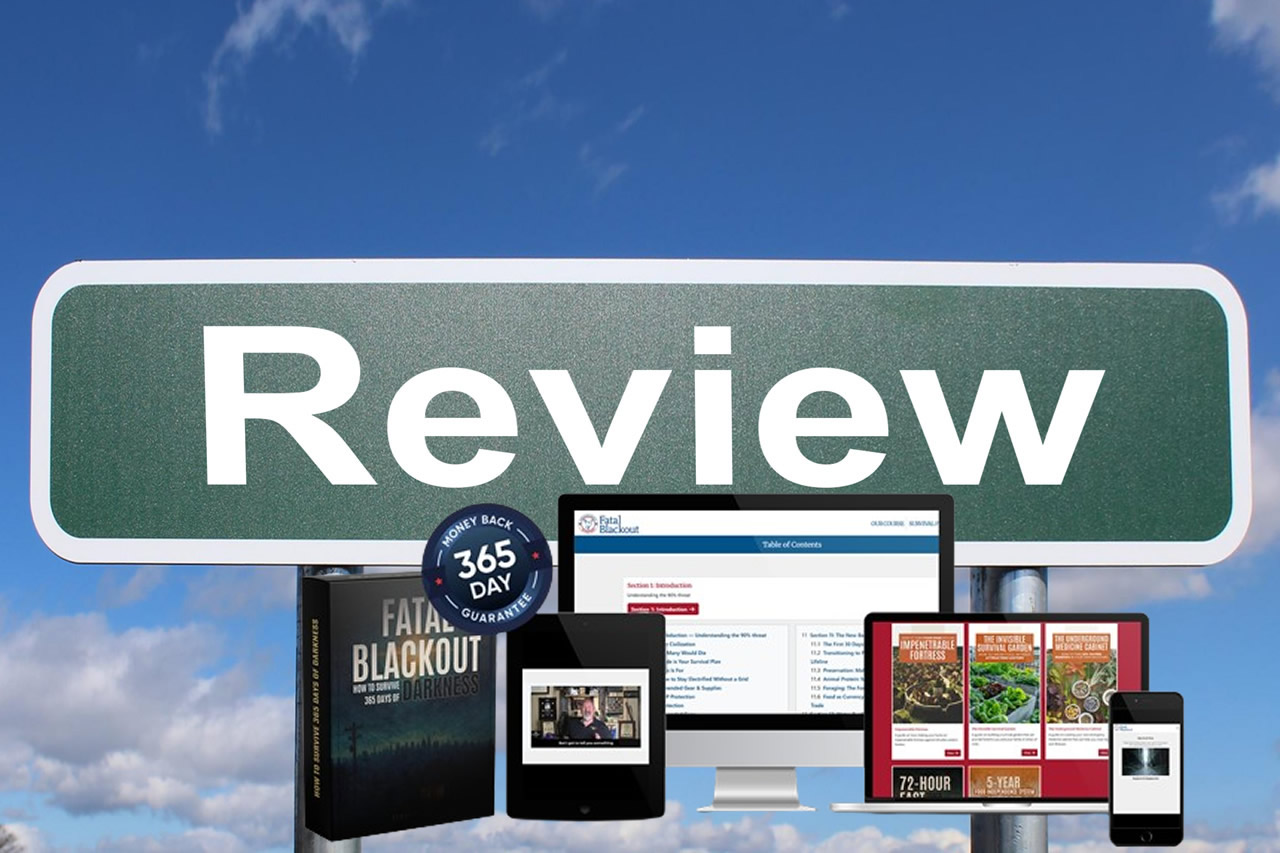
Fatal Blackout is combat veteran-written survival guide (in the event of a grid-down scenario). It comes in the form of both a physical (peperback) book, as well as a digital guide (not a PDF but rather in the form of a digitally-secure multi-page HTML-based document, organized in chapters (including Understanding the 90% threat, Why Water Comes First, The Rule of 3 Layers: Carry, Access, Cache, The Best Weapon to Protect Your Family Against the Mob, Evacuating vs. Bugging Out: A Tactical Difference, and a lot more).. This guide also includes videos wheree Teddy gives personal advice and clarification. Included are also various bonus books included in your digital locker, including Imprentrable Fortress and The Invisible Survival Garden.
When the grid goes down (and I mean really down, not your average thunderstorm flicker) most people are caught like deer in headlights. But Fatal Blackout by Teddy Daniels? It’s built for the 1% who refuse to be part of the body count.
This isn’t your typical prepper PDF. It’s the upgraded, streamlined, and far more potent version of Operation Blackout. Fatal Blackout gives you more than words on a page—it hands you an entire blueprint for surviving any blackout, EMP attack, or long-term grid failure… with confidence, skill, and military-tested strategy.
The Difference Is Immediate
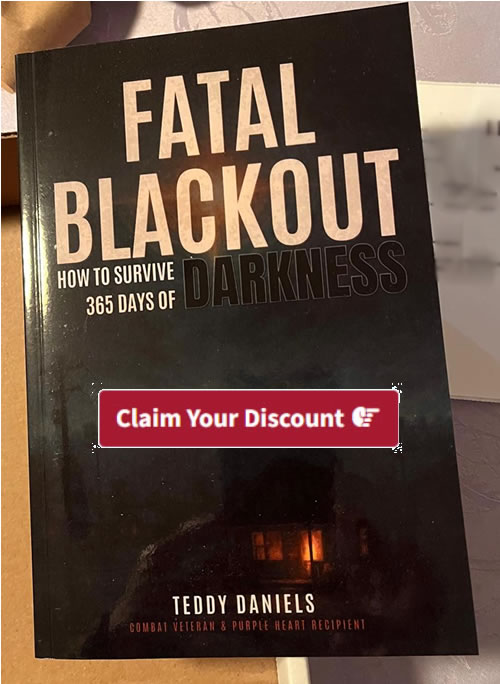
I’ve read dozens of survival manuals over the years. Most are recycled fluff. This one hits different.
Teddy Daniels doesn’t just talk theory, he delivers field-tested solutions straight from elite military playbooks. Unlike the original Operation Blackout, this edition includes clear videos, not just digital PDFs. That means faster implementation. No guessing. No screw-ups.
Whether you’re a seasoned prepper or someone just waking up to how fragile the grid really is, you’ll have your systems locked down in days, not months.
EMP Attack: The Threat That Was Already on the Record
In intelligence briefings that have been buried in time, the threat of EMP attack was never just some far off theory. Analysts had warned us for years that the biggest weakness of the United States wasn’t an invasion, but its dependence on technology. Former CIA analyst and EMP expert Peter Vincent Pry testified repeatedly that a single nuclear device detonated at high altitude could cripple the U.S. power grid from coast to coast. This wouldn’t happen by actually destroying cities, but by fryng the electronics that support modern life. His warning was clear: the grid was never built to endure a nationwide electromagnetic shock, and recovery would take time.
Congress confirmed this risk in black and white. The Congressional EMP Commission found that the United States remained dangerously unprepared for an EMP attack, despite being aware of the threat for decades. Their reports indicated that a prolonged grid failure would result in cascading failures in water treatment, food distribution, healthcare, fuel supply, and communications. They assessed that the real danger wasn’t the initial attack itself, but the ensuing societal chaos. It was what would happen when systems failed all at once, and replacement infrastructure simply didn’t exist on a large scale.
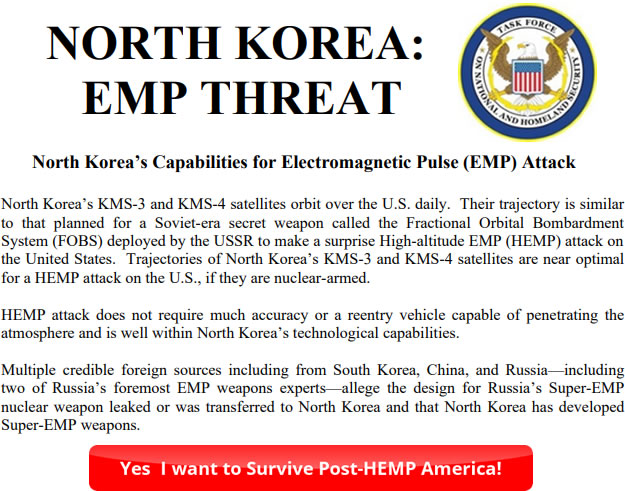
One adversary kept appearing in those reports: North Korea. According to Congressional findings and open-source intelligence, North Korea had tested nuclear devices designed for EMP effects and demonstrated satellite paths that could allow for a high-altitude detonation over North America. The Commission warned that such an attack wouldn’t require intercontinental missiles aimed at cities. A single, properly positioned launch, could take advantage of physics instead of firepower. Determining who was responsible would be uncertain. Retaliation would be politically complicated. Meanwhile, the grid would already be down.

This is where preparedness turns into strategy, not fear. Pry and the Commission both highlighted the same uncomfortable truth: deterrence fails when the attacker believes the damage will come from collapse rather than combat. In this scenario, Americans who prepared weren’t expecting war in the traditional sense.
They understood the systems. They knew that large transformers take years to replace, that fuel requires electricity to flow, and that government help assumes the infrastructure still functions. When the lights don’t return, preparedness isn’t rebellion. It’s making sure things continue in a world where the warnings were always there; quietly noted, thoroughly documented, and ignored.
What You Actually Get
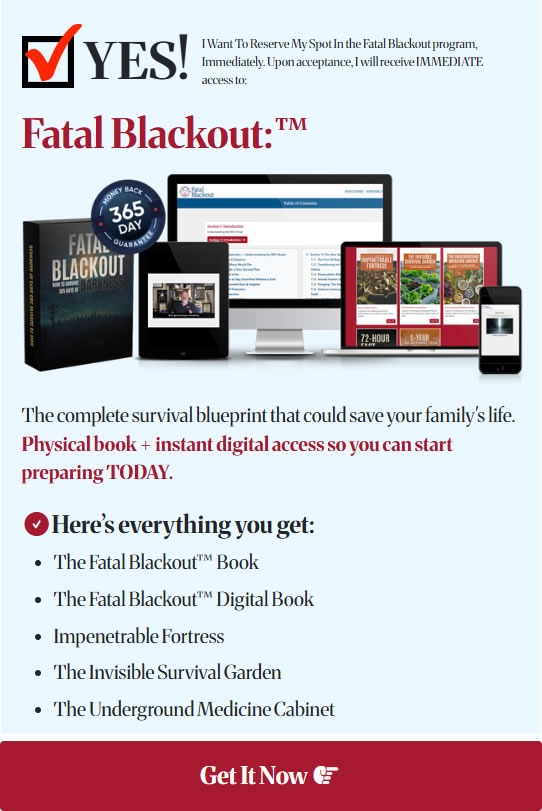
Here’s the brutal truth: When the lights go out, 90% of your neighbors won’t last the month. Fatal Blackout makes damn sure you’re not one of them.
You’ll get:
- The complete Fatal Blackout survival system used by military special forces.
- 365-Day Blackout Protocol for surviving a full year off-grid.
- Unlimited Energy guide so you never sit in the dark.
- EMP Shield Mastery to bulletproof your electronics.
- 30-Second Home Defense Setup that stops looters in their tracks.
- The Invisible Survival Garden, letting you grow food without tipping off raiders.
The mission? Stay hidden. Stay safe. Stay fed. Stay alive.
Bonuses That Could Save Your Life

Fatal Blackout includes three extra guides that should be mandatory for any real prepper:
- How to Turn Your Home Into an Impenetrable Fortress – 12 military-grade defense tactics. Your house becomes a hard target. Looters move on.
- The Underground Medicine Cabinet – Natural remedies when hospitals go offline. You’re your own doctor now.
- Invisible Garden Blueprint – Grow your own food, even in plain sight. No experience required.
These aren’t “nice to haves.” In a post-EMP world, these are survival essentials.
Fatal Blackout Teddy Daniels Reviews and Complaints: What Real Patriots Are Saying

People are waking up. And the reviews? They’re speaking volumes.
“We were the only house with power during an 8-day blackout. Neighbors begged us for help. This program saved our lives.” — Michael, Texas
“I had no clue what I was doing. But within a weekend, I had the EMP shields up, food growing, and water secured. I sleep easy now.” — Sarah, Single Mom of Two
“Thought I was ready. Turns out I was dead wrong. Fatal Blackout showed me everything I missed.” — Jim, Colorado
Others call it the best survival investment they’ve ever made. These aren’t rookies. These are hardened patriots, just like you and me.
Fatal Blackout Reviews: Real Customer Feedback

“It changed how I prep. I’m no longer guessing. I know we’ll survive.” – Robert D.
“I never expected to be this confident. Now I know I can protect my kids.” – Emily W.
“It’s not just a survival guide. It’s peace of mind.” – John D.
“Every checklist, every video, it’s like having Teddy in your living room.” – Adam K.
The Window Won’t Stay Open

Here’s the kicker. This program isn’t just powerful—it’s risk-free. Teddy Daniels is backing Fatal Blackout with a full 365-day money-back guarantee. That’s not just confidence. That’s proof.
For a limited time, the price is slashed from $220 to just $67. This won’t last. When the grid fails—and it will—there won’t be time to prepare. There will only be the prepared and the perished.
Fatal Blackout FAQ
Is Fatal Blackout Legit?
Yes. Fatal Blackout is a real emergency preparedness training system created by combat veteran Teddy Daniels. It is not a scam. The program delivers a physical book shipped to your address plus digital access to a secure members area stocked with step-by-step instructions, video walkthroughs, and bonus guides. What you are buying is knowledge. The Fatal Blackout program does not include physical gear, generators, or food supplies. You get the blueprint. You source the materials yourself, most of which are available at any hardware or grocery store for under $50.
That said, it pays to read the fine print. The purchase structure includes a 7-day free trial for the digital members area, which converts to a recurring monthly charge if not canceled. Some buyers have been caught off guard by that. As a Fatal Blackout review 2026 standpoint, the core content is legitimate and grounded in real emergency preparedness logic. If you are just waking up to how vulnerable modern infrastructure actually is, this program gives you a structured starting point. It is not a miracle solution. No emergency preparedness training system is. But the step-by-step framework is practical, the content is organized, and the information draws on real field experience.
What Is the Blackout Book About?
The Fatal Blackout book is a grid-down survival manual built around one core idea: when the power goes out for real, most people have no plan. The book walks you through what actually happens when the electrical grid fails and what you need to do about it, fast. It covers water security first, which most people ignore until it is too late. Then it moves into power redundancy, food storage, home defense strategy, and long-term sustainment. The complete 365-day blackout protocol is the backbone of the program, designed to carry a household through a full year of grid failure.
Chapters address the things other survival books skip. Evacuating versus bugging out are not the same decision, and the book makes that distinction clear. There is a section on what Daniels calls the Rule of 3 Layers, a carry, access, and cache system for organizing your resources. Home defense tactics focus on deterrence rather than escalation. Bonus guides cover building an impenetrable fortress from your existing home, maintaining an underground medicine cabinet when hospitals go offline, and growing food without tipping off anyone who might want to take it. The blackout book is less about wilderness survival and more about surviving a prolonged blackout emergency right where you live.
Is There Going to Be a Blackout in 2030?
Nobody can predict a specific grid failure the way you predict weather. But the trends are not reassuring. Power grids across the United States and much of the world are aging infrastructure stretched by new demands. Electric vehicles, smart homes, cryptocurrency mining, and the push toward renewable energy sources have all added complexity to systems that were not built to handle them. Solar and wind generation produce variable output depending on conditions. Traditional plants take time to ramp up or down. Balancing that becomes harder every year.
Extreme weather is also escalating the pressure. Ice storms, hurricanes, and heat waves have caused more outages in the last decade than at any point in recent memory. The 2003 Northeast blackout, which cut power to 55 million people, started with an overgrown tree touching a transmission line. A small failure can cascade fast. By 2030, if current infrastructure investment does not keep pace with demand, the risk of a major regional outage increases. No credible agency is predicting a single catastrophic nationwide blackout in 2030. But experts are consistent about one thing: prolonged outages from extreme weather or equipment failure are becoming more likely, not less. That is reason enough to have an emergency plan.
What Is the Biggest Blackout in History?
The largest power outage in recorded history hit India on July 31, 2012. A relay problem near the Taj Mahal triggered a cascade that knocked out roughly 38 percent of India’s generation capacity. Twenty-two out of 28 states went dark. The outage affected approximately 620 million people, close to 9 percent of the entire world’s population at the time. Power was restored to most areas by August 1, but the scale was unprecedented. Investigations afterward called for a $400 billion grid overhaul.
For North America, the record belongs to the Northeast Blackout of August 14, 2003. A software bug at a utility control center in Ohio failed to alert operators when transmission lines sagged into overgrown trees. The cascade spread across 9,300 square miles in approximately nine seconds. Over 508 generating units at 265 power plants shut down. Around 55 million people across eight U.S. states and Ontario, Canada lost power. New York City went completely dark. Water pressure dropped as pumps failed. Some areas were without electricity for four days. The economic cost ran between $6 and $10 billion. It remains the largest blackout in North American history.
Other notable outages include Brazil in 1999, when a single lightning strike at a substation triggered a cascade that left 97 million people without power for up to ten days. Pakistan experienced a near-total national blackout in January 2023, affecting around 230 million people due to a voltage fluctuation. These events share a common thread: they were not caused by enemy attacks or dramatic sabotage. They were caused by aging infrastructure, cascading technical failures, and systems pushed past their limits.
How to Survive a Blackout
Survival skills for a blackout start before the lights go out. The window between a normal power outage and a full blackout emergency is short. Most people spend the first 24 hours hoping the power comes back. Do not waste those hours. Your first priority is water. Municipal water systems depend on electric pumps. In a prolonged outage, taps stop running. Store a minimum of one gallon per person per day, and have a filtration or purification option ready. The Fatal Blackout system emphasizes water security above everything else for a good reason.
Food storage is the next layer. Canned goods, sealed dry foods, and a manual can opener are not glamorous but they work. Keep a minimum two-week supply on hand. A 30-day supply is better. The complete 365-day blackout protocol goes further, building out a full-year food plan that includes discreet home gardening. For power, a battery bank handles phones and small devices. A generator handles more, but requires fuel storage and ventilation. For home security, your goal in the first 72 hours of a major outage is to look like a low-value target. Keep lights minimal. Do not broadcast that you have resources others lack.
Communication matters. A battery-powered or hand-crank emergency radio keeps you connected to official updates when cell towers go down. Establish a meeting point with family members in case you cannot reach each other by phone. Write important numbers down. Phones die. Paper does not. Peace of mind in a blackout emergency comes from having made decisions before the crisis, not during it. Step-by-step preparation before an outage is what separates people who manage from people who panic.
What Do People Do During a Blackout?
Most people do the same few things in the first hour of a power outage. They check if it is just their home. They look out the window. They scroll social media until their phone battery drops. They look for candles. For a short outage, that is fine. For a blackout emergency that stretches into days, that response runs out fast.
People with a real emergency plan operate differently. They account for family members, check on neighbors who may be vulnerable, and move through a prepared checklist rather than reacting randomly. Refrigerators and freezers hold temperature for 4 hours and 48 hours respectively if kept closed. That is a short window. Knowing when to cook perishables and when to let them go is a real decision. Medical equipment that depends on electricity becomes a life-safety issue within hours for some households. An emergency plan accounts for that before it becomes a crisis.
During longer blackouts, community behavior shifts. People congregate, share resources, and look out for each other. That is the best outcome. It is also unpredictable. Emergency preparedness is ultimately about reducing your dependence on external help so you can make clear decisions under pressure. Whether the outage lasts six hours or six weeks, the households that come through best are the ones that treated emergency preparedness as a serious priority before the lights ever went out.
Final Word From a Fellow Survivor
I don’t recommend garbage. I don’t waste time. Teddy Daniels Fatal Blackout Review? Five stars. Zero fluff. This is the edge you need when the power fails and chaos takes the streets.
You want your family to survive? You want to lead when others fall? Then get Fatal Blackout now—before it’s too late.