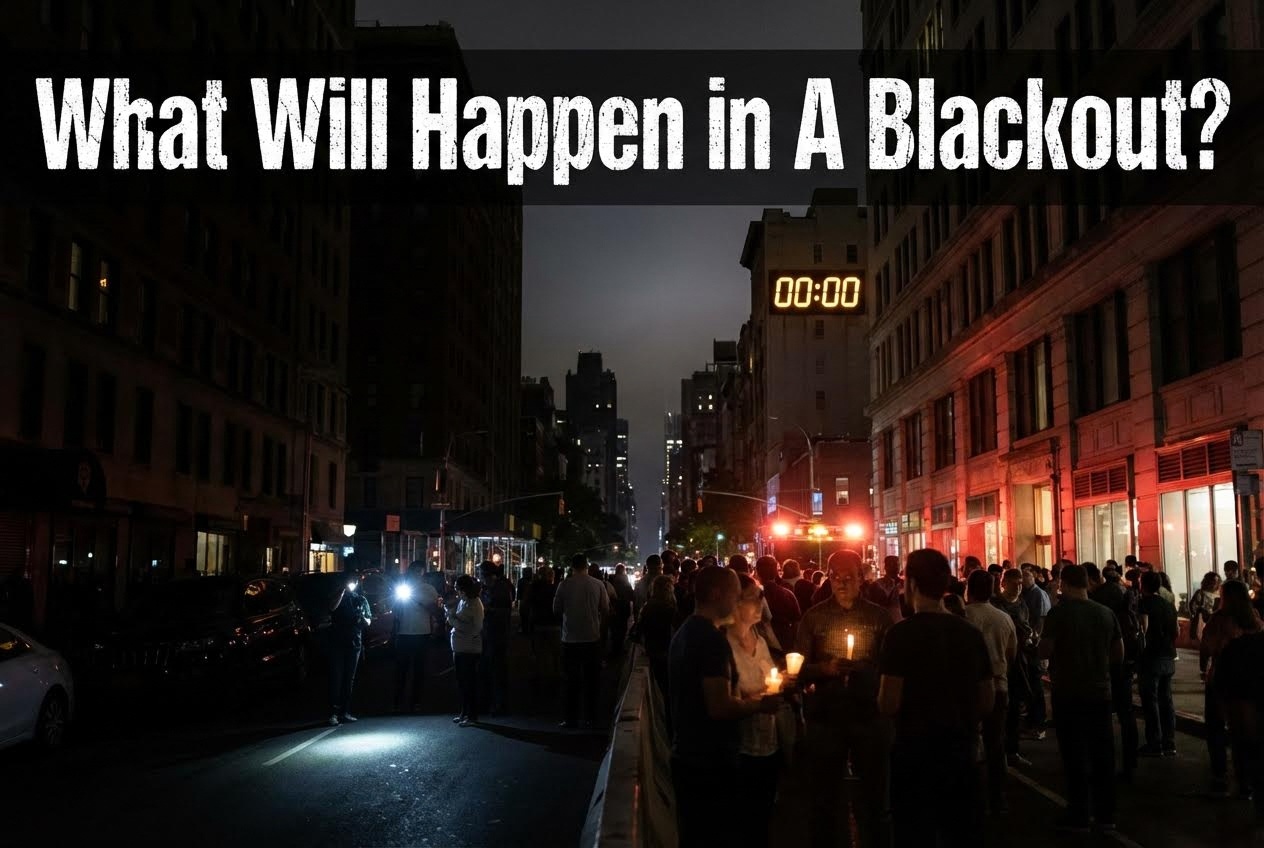
TLDR: During a blackout, all electrical power stops immediately. Lights go out, appliances shut down and communication systems struggle as millions of people lose their electricity at the same time. The outage happens when the grid loses balance between power generation and demand. The result is automatic shutdowns that can spread across entire regions within a matter of seconds. Most blackouts last a few hours while utility companies work to restore power in stages. However, severe weather or equipment damage can prolong outages for days or even weeks.
A blackout can happen suddenly, throwing entire cities into darkness within a matter of seconds. Knowing what occurs during a blackout is not just for curiosity; it’s important information that can help protect you, your family and your property. This guide explains the series of events that take place when the grid loses power, the causes of large blackouts, and how power systems work to restore electricity after a major failure.
What Exactly Is a Blackout and How Does It Differ from Other Power Issues?
A blackout represents the complete loss of power to a specific area. Unlike a brownout—which involves reduced voltage in an electrical power supply causing lights to dim—a blackout means total darkness. Power outage terminology often gets confused, but the distinction matters.
When the grid experiences a power cut, the electrical power network supply to end users completely stops. This differs dramatically from a brownout, where reduced voltage can damage sensitive equipment even though some electricity still flows. A power failure affecting just one home isn’t technically a blackout. True blackouts impact neighborhoods, cities, or even entire regions.
The most severe form is a nationwide blackout, though these remain extremely rare. Most blackouts last minutes to hours. Some larger blackouts, however, stretch into days or even weeks when major infrastructure damage occurs or when a black start becomes necessary to restore power.
How Does the Grid Maintain Balance Between Power Supply and Demand?
Your electrical grid operates on a knife’s edge. Power generation and consumption must match precisely every single second. Think of it like a perfectly balanced scale—tip too far either direction and problems cascade rapidly.
The power grid maintains a standard frequency of 50 Hz (60 Hz in North America). When demand exceeds supply, frequency drops. When power plant output exceeds consumption, frequency rises. These fluctuations trigger automatic responses from power systems across the grid. Utility companies constantly monitor and adjust generation to maintain this critical balance.
Modern grids face new challenges from renewable energy sources. Solar panels and wind farms produce variable amounts based on weather. A gas-fired power plant can ramp production up or down within minutes. Nuclear power plants and thermal power plants take hours to adjust. This makes the grid power balance increasingly complex to manage as more renewable sources connect to the power distribution network.
What Triggers a Large-Scale Power Blackout?
Multiple factors can cause a power disruption. Severe weather tops the list—hurricanes, ice storms, lightning strikes, and heat waves all bring down power lines and damage infrastructure. The northeast blackout of 2003 began when overgrown trees contacted high-voltage transmission lines. That single equipment failure eventually caused 55 million people without power across the U.S. and Canada.
Grid overload happens when extreme temperatures drive excessive demand. Winter cold snaps force heating systems into overdrive. Summer heat waves push air conditioning to maximum capacity. If a power plant fails during peak power demand, the sudden loss of power generation stresses the rest of the grid.
Human error, equipment malfunction at power stations, transformer failures, and even cyberattacks threaten stability. Cascading failures represent the most dangerous scenario. When one component trips offline, neighboring sections of the grid suddenly carry extra load. This cascade can progressively take down the entire electrical grid if protective systems don’t respond fast enough.
What Happens in the First Seconds When Power Is Lost?
Everything electrical stops simultaneously. Lights go out instantly. Your refrigerator, computer, television—all dead. Traffic signals go dark. Internet routers lose power. Cell towers switch to backup power, but these emergency power sources have limited capacity.
Modern life depends on continuous electricity. Most people don’t realize how much until it vanishes. Your natural gas furnace won’t work without power—the electronic ignition and control systems need electricity. Electric heat pumps obviously stop. Even if you have municipal water, high-rise buildings lose pressure as pumps fail. Communication networks strain under the sudden surge of calls.
Within minutes, temperatures inside refrigerators and freezers begin rising, putting food supplies at risk. Battery-powered devices continue working temporarily. Smartphones become precious resources, but without power sources to recharge them, batteries drain toward zero. People without electricity face a new reality that feels distinctly 19th century.
How Do Cascading Failures Spread Across Power Systems?
Cascading failures represent the nightmare scenario for power companies. The process starts small but explodes outward. When a transmission line fails, power must reroute through alternative paths. These alternative power lines weren’t designed for the extra load.
Protective relays detect the overload. They disconnect sections automatically to prevent physical damage. This forces even more power through remaining circuits, triggering more disconnections. The cascade accelerates. What began as a localized power blackout rapidly expands across the electric grid.
Modern power grids have multiple redundancy layers specifically to prevent cascade events. Engineers design networks so that losing one or even several components won’t bring down the entire system. But when multiple failures occur simultaneously—severe weather damaging infrastructure while demand peaks—even robust systems can collapse. The interruption spreads faster than human operators can respond, leading to widespread power distribution failures.
Why Do Power Stations Disconnect from the Grid During Blackouts?
Large power plants protect themselves by disconnecting when the grid becomes unstable. This might seem counterintuitive—why would generators shut down when people need electricity most? The answer lies in protecting critical infrastructure from catastrophic damage.
When frequency or voltage swing wildly outside normal ranges, generator equipment faces potential destruction. Repairing or replacing a damaged turbine at a nuclear power plant or large power plant costs millions and takes months. Delivery times for specialized components exceed half a year. The economic and practical consequences of equipment failure far exceed the temporary loss of generation capacity.
Gas-fired power plants and hydroelectric facilities shut down automatically when grid conditions deteriorate beyond safe operating limits. This self-protection mechanism, while necessary, makes the blackout worse in the short term. Each power station that disconnects forces more load onto remaining active generators, accelerating the collapse. But without this safety measure, the damage could prevent power restoration for months rather than hours or days.
What Role Does Emergency Power Play When the Lights Go?
Critical facilities maintain backup power sources for exactly this scenario. Hospitals rely on standby generators that activate automatically within seconds. These systems keep operating rooms, intensive care units, and life support equipment running. Similarly, water treatment plants, sewage facilities, and emergency services have dedicated backup power.
Most businesses and homes, however, lack emergency power systems. Installing a generator capable of running essential appliances costs thousands of dollars. Fuel storage and maintenance add ongoing expenses. The majority of people simply go without when the power goes out.
Battery backup systems and uninterruptible power supplies (UPS) protect computers and sensitive electronics from sudden shutdowns. But these typically provide only 15-30 minutes of runtime—enough to save work and shut down properly, not enough to wait out an extended power outage. For longer backup power, you need substantial energy storage or a fuel-burning generator connected to your home emergency power panel.
How Long Does a Typical Blackout Last?
Most blackouts resolve within hours. Local power outages from a downed power line or blown transformer typically get fixed in 2-4 hours. Utility companies identify the problem, dispatch crews, and restore power relatively quickly.
Larger blackouts affecting multiple neighborhoods or cities take longer. Restoration requires coordination between power suppliers, transmission operators, and distribution networks. Engineers must carefully bring the electrical power supply back online in stages. Rushing the process risks triggering another blackout.
Major blackouts lasting days occur when infrastructure sustains severe damage. Hurricane-damaged power lines need physical reconstruction. Ice storms that collapse transmission lines require extensive repairs. The blackout of 2003 left some areas dark for over a week. When damage is widespread and repair crews are overwhelmed, restoration extends into days or even weeks for the hardest-hit areas.
What Happens When Utility Companies Attempt to Restore Power?
Restoring electricity after a major blackout requires careful coordination. You can’t simply flip a switch and bring everything back. The process demands precision to prevent immediately triggering another power failure.
A black start initiates the recovery. Certain power plants—typically hydroelectric facilities—can self-start without external electricity. These special generators use stored energy to begin operation. Once running, they provide electricity to other nearby power stations, allowing those facilities to restart.
The power company then energizes transmission lines progressively, building “power islands.” Engineers connect these islands together gradually, synchronizing frequencies and loads carefully. As sections restore power, operators reconnect consumers in phases. Critical infrastructure comes first—hospitals, emergency services, water systems. Residential areas follow. The goal is balancing generation capacity with returning demand to avoid overload.
What Can Cause a Nationwide Power Outage?
Nationwide blackouts require truly catastrophic circumstances. The interconnected nature of modern electrical grids provides resilience. Different regions generate and share power. When one area struggles, neighboring grids can help compensate.
Severe space weather poses one threat. Solar storms can induce electrical currents in long transmission lines, potentially damaging transformers across vast regions simultaneously. Coordinated cyberattacks targeting power infrastructure represent another nightmare scenario. A successful assault on grid control systems could disable generation and distribution across an entire nation.
Extreme cold or heat affecting an entire country could conceivably trigger nationwide power problems. If record-breaking temperatures span coast to coast while key infrastructure fails, the resulting strain might exceed the grid’s capacity to respond. However, modern interconnected power systems make true nationwide blackouts exceptionally rare. Regional blackouts remain far more common.
How Can You Prepare for the Next Power Blackout?
Preparedness means having essential supplies before the grid goes dark. Start with non-perishable food that doesn’t require cooking. Include manual can openers, paper plates, and plastic utensils. Store one gallon of water per person per day for at least three days.
Keep flashlights and extra batteries accessible. Battery-powered or hand-crank radios provide information when communication networks fail. Charge portable battery banks and keep devices topped off when severe weather threatens. Consider a basic first aid kit and necessary medications.
Larger investments improve resilience substantially. Whole-house generators automatically provide power when the main supply fails. Solar panels with battery storage can keep essential appliances running. Even a modest power station battery can charge phones and run LED lights for days. The cost of preparedness pales compared to the disruption of extended time without power in a given situation.
Essential Takeaways for Blackout Preparedness
- Blackouts occur when the grid loses balance between generation and demand – A sudden loss of power from generation facilities or excessive load can trigger automatic disconnections to protect equipment, cascading into wider blackouts.
- Cascading failures spread rapidly across interconnected power systems – When one section fails, overload shifts to adjacent areas, potentially bringing down large sections of the grid before operators can respond.
- Power stations disconnect automatically to prevent equipment damage – Generators protect themselves from destruction by shutting down when grid conditions become dangerously unstable, even though this worsens the immediate blackout.
- Black start procedures restore power progressively in stages – Special generators that can self-start bring other power plants online, building “power islands” that gradually reconnect to restore service systematically.
- Most blackouts resolve within hours, but major events can last weeks – Local outages typically fix quickly, while widespread infrastructure damage from severe weather may require extensive repairs before the power is restored.
- Critical facilities maintain backup generators for essential operations – Hospitals, emergency services, and water treatment plants have dedicated backup power, but most homes and businesses operate without electricity during blackouts.
- Severe weather, equipment failures, and grid overload cause most blackouts – Ice storms, heat waves, aging infrastructure, and cascading failures remain the primary causes, with rare events like the Northeast Blackout affecting millions.
- Modern renewable energy adds complexity to grid management – Variable power from solar and wind requires careful balancing with controllable sources like gas-fired power plants to maintain stable grid power.
- Preparedness minimizes disruption when power is lost – Maintaining emergency supplies, backup power sources, and a clear plan protects your family when rolling blackouts or unexpected outages strike.
- True nationwide blackouts remain extremely rare – The interconnected electrical grid provides resilience, with regional systems supporting each other during local disruptions, making coast-to-coast power failures highly unlikely.