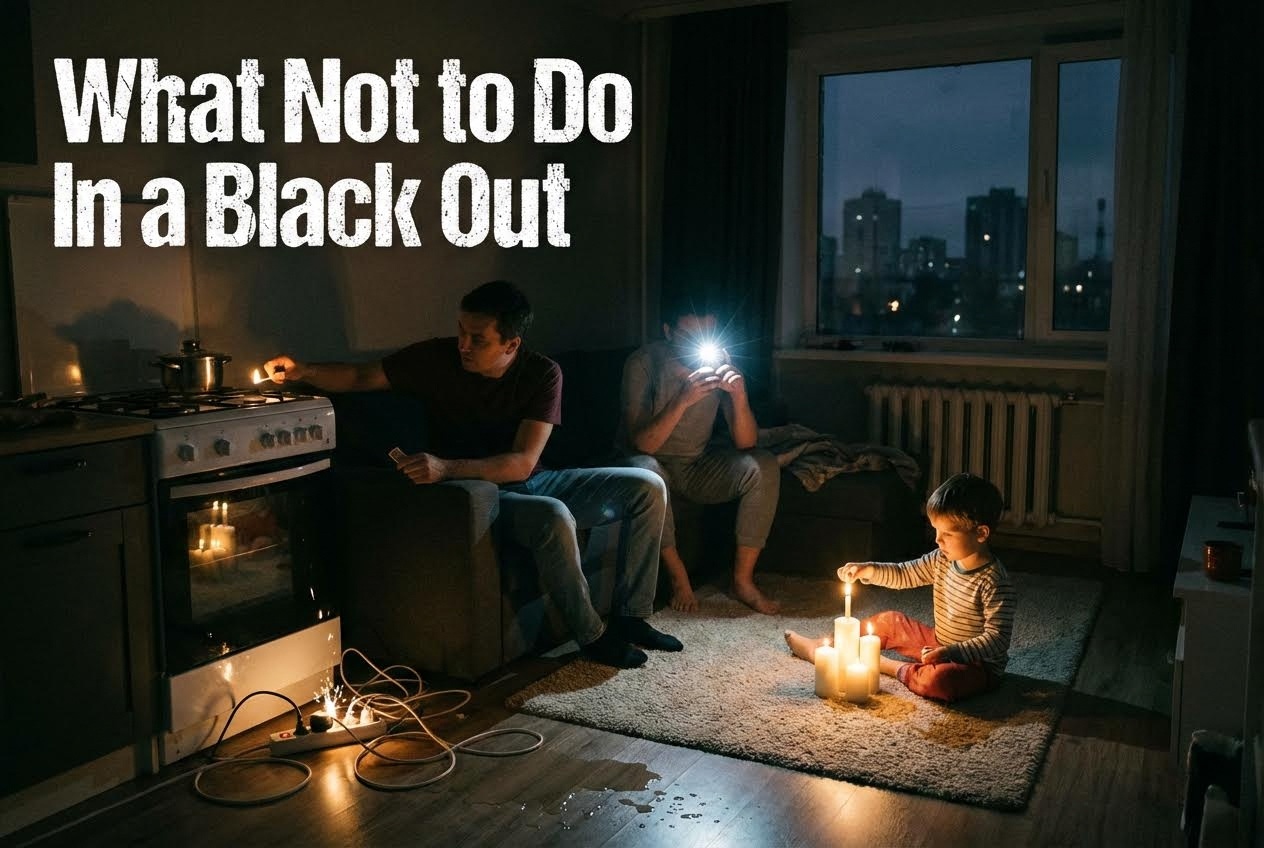
TLDR: When it comes to a blackout, avoid using generators indoors, gas stoves for heating, and don’t use open flames near flammable materials; these things cause carbon monoxide poisoning, fires, and avoidable deaths every year. Avoid opening your refrigerator and freezer doors, don’t touch fallen power lines, and never leave major appliances plugged in during outages to avoid damage from power surges. Following these power outage safety guidelines can mean the difference between minor inconvenience and life-threatening danger when it comes to a black out.
When a blackout strikes, panic and poor decisions put families at risk. Many people make dangerous mistakes during power outages simply because they don’t know better. This guide reveals the critical errors that cause injuries, fires, and fatalities during outages—and exactly how to avoid them. Understanding what NOT to do is just as important as knowing proper emergency preparedness steps. These safety tips could save your life and protect your property when the power goes out.
Why Is Generator Safety Your Top Priority During a Power Outage?
Generators kill people every year through carbon monoxide poisoning. Running a generator indoors, in your garage, or even near windows creates deadly conditions within minutes. Carbon monoxide is colorless and odorless. You won’t know it’s there until symptoms appear—headache, dizziness, nausea, and eventually death.
Never use a generator inside your home, basement, garage, or any enclosed space. Place generators at least 20 feet away from windows, doors, and vents. The exhaust must vent away from your house. Even with garage doors open, carbon monoxide concentrations can reach lethal levels. One running generator produces as much carbon monoxide as hundreds of idling cars.
Don’t connect generators directly to your home’s electrical system unless you have a proper transfer switch installed by a licensed electrician. Backfeeding electricity into power lines can electrocute utility workers trying to restore power. It can also damage your generator and appliances when power returns. Generator safety requires proper setup, adequate ventilation, and correct electrical connections. Cutting corners on any of these requirements can prove fatal.
What Makes Using Candles and Open Flames So Dangerous in a Blackout?
Candles cause hundreds of house fires annually during power outages. People who wouldn’t normally use candles suddenly light dozens throughout their home. They place them on unstable surfaces, near curtains, or forget about them when power returns. The risk of fire multiplies dramatically during outages.
Never use candles as your primary light source when you have safer alternatives. Battery-powered flashlights and LED lanterns provide reliable illumination without fire danger. If you must use candles, place them in sturdy holders on stable surfaces away from anything flammable. Never leave burning candles unattended. Pets and children can knock them over in seconds.
Don’t use charcoal grills or camping stoves indoors for heating or cooking. Burning charcoal produces massive amounts of carbon monoxide. Even “smokeless” charcoal releases deadly gases in enclosed spaces. The same applies to propane camping stoves and heaters not specifically rated for indoor use. What seems like a clever heating solution becomes a death trap. Stick to battery-powered lights and stay safe rather than gambling with open flames.
Should You Ever Use Your Gas Stove or Oven to Heat Your Home?
Using a gas stove or oven to heat your home ranks among the deadliest mistakes during power outages. Stoves and ovens aren’t designed for space heating. They produce carbon monoxide and other toxic gases in concentrations dangerous for enclosed spaces. Running them for hours depletes oxygen while building up poisonous fumes.
Don’t leave your oven door open with burners running to warm your kitchen. This creates multiple hazards—carbon monoxide accumulation, fire risk from nearby flammable items, and potential gas leaks if flames extinguish. Modern safety features that require electricity won’t function during outages. Your oven to heat your home is never a safe solution, regardless of how cold you feel.
If you’re genuinely concerned about freezing, move to the lowest level of your home where heat naturally accumulates. Close off unused rooms and gather family members in one space. Use blankets, sleeping bags, and body heat. Dress in layers. These strategies heat your home safely without risking carbon monoxide poisoning or fire. Never compromise safety for temporary comfort during extended power outages.
Why Must You Keep Your Refrigerator and Freezer Doors Closed?
Opening your refrigerator and freezer doors repeatedly during a power outage destroys their insulating capability. Each time the door opens, cold air escapes and warm air enters. Your food warms faster and spoils sooner. A full freezer will keep food at a safe temperature for about 48 hours if the door remains closed. Opening it even a few times can cut that time in half.
Keep your refrigerator and freezer doors closed as much as possible when the power goes out. A refrigerator will keep food cold for about four hours without power if you don’t open it. Your freezer stays colder longer—a full freezer maintains safe temperatures much better than a partially filled one. The contents themselves act as thermal mass, helping maintain cold temperatures.
Don’t rearrange items or check temperatures repeatedly. Before the outage occurs, keep your freezer stocked even if you need to fill empty spaces with ice blocks or bags of ice. After power returns, check food temperatures with a thermometer. Throw out food that reached above 40°F for more than two hours. This includes medication that should be refrigerated. Taking inventory helps you know what’s safe to keep and what poses health risks. Keep food safe by minimizing door openings and monitoring temperatures after restoration.
What Appliances Should You Turn Off When the Power Goes Out?
Leaving major appliances plugged in during power outages sets you up for expensive damage when electricity returns. Power surges frequently occur as the grid restabilizes. These voltage spikes can destroy sensitive electronics, motors, and circuits in seconds. Computers, televisions, microwave ovens, and HVAC systems are particularly vulnerable.
Turn off or disconnect major appliances when you realize the power is out. Unplug computers, entertainment systems, kitchen appliances, and sensitive electronics. Leave one light switch in the “on” position so you’ll know when power comes back. This prevents you from forgetting appliances in dangerous operating states. For example, a clothing iron left on could start a fire when power returns hours later.
Don’t restart all your appliances simultaneously when the power returns. Stagger their reconnection over 10-15 minutes. This prevents overwhelming the electrical system as it stabilizes. Your air conditioner, water heater, and refrigerator all draw significant power when starting. Activating them all at once can trigger another outage or damage the equipment. Protect yourself during a power outage by managing your electrical load intelligently before and after the event.
How Can Downed Power Lines Put You at Risk?
Downed power lines kill people who assume the lines are dead. Never approach or touch any fallen power line. Live wires can remain energized for hours or days after they fall. They can electrify the ground around them, metal fences, puddles, and anything conductive within 35 feet. You can’t tell if a wire is live just by looking at it.
Don’t drive over downed power lines or through standing water near them. Your vehicle’s rubber tires won’t protect you—the electrical current can arc and create dangerous situations. If you’re in a vehicle that contacts a power line, stay inside unless fire forces you out. If you must exit, jump clear without touching the vehicle and ground simultaneously. Shuffle away with small steps to avoid creating a voltage gradient through your body.
Report downed power lines immediately to emergency services and your utility company. Keep others away—especially children and pets who might not understand the danger. Even “dead” lines can become energized without warning as workers attempt to restore service. Treat every downed line as lethal. Report the outage and the hazard, then maintain a safe distance of at least 20 feet from any fallen wire or anything touching it.
Why Is Carbon Monoxide Poisoning a Hidden Threat During Power Outages?
Carbon monoxide poisoning spikes during extended power outages when people use alternative heating and cooking methods. Most victims never see it coming. Early symptoms—headache, fatigue, dizziness—feel like stress from the outage itself. By the time you recognize the danger, impaired judgment may prevent you from escaping.
Never burn anything indoors for heat. This includes wood, charcoal, propane, kerosene, or gasoline. Don’t use a charcoal grill inside your garage “just this once.” Don’t run your car in an attached garage to charge your phone. These decisions have killed entire families during power outages. Carbon monoxide detectors require electricity or battery backup—test them regularly and keep fresh batteries on hand.
Know the signs of carbon monoxide exposure: headache, dizziness, weakness, nausea, vomiting, chest pain, and confusion. If multiple family members develop these symptoms during a power outage, evacuate immediately and call 911. Fresh air can reverse early exposure, but severe poisoning causes permanent brain damage or death. Prevent carbon monoxide tragedy by absolutely refusing to burn fuel indoors regardless of how desperate the situation seems. Stay safe by maintaining strict fuel-burning protocols outdoors only.
What Common Mistakes Prevent You From Staying Safe in Extended Outages?
Unnecessary travel during widespread outages puts you at risk. Traffic signals stop working. Street lights go dark. Other drivers may panic or drive recklessly. Accidents increase dramatically during major power outages. Gas stations can’t pump fuel without electricity. You might run out of gas far from home.
Don’t assume your cell phone will work throughout an extended power outage. Cell towers have backup batteries, but these typically last only 4-8 hours. Once tower power depletes, your mobile service disappears. Keep your phone charged and use it sparingly. A power bank can extend your phone’s life, but conserve that charge for genuine emergencies. Your home phone may continue working if you have a corded landline—cordless phones require electricity and won’t function during outages.
Eliminate unnecessary travel and stay home during blackouts when possible. If you must drive, keep your gas tank at least half full at all times during storm season. Fill up before predicted severe weather arrives. Don’t venture out just to “see what’s happening” or check on non-emergency situations. Medical devices that require electricity need backup power solutions planned in advance—waiting until an outage occurs leaves you vulnerable. Emergency preparedness means anticipating these challenges before they become crises.
How Should You Prepare for a Power Outage Before It Happens?
Waiting until the power goes out to prepare guarantees poor outcomes. You can’t buy supplies in the dark. Stores may be closed or stripped of essentials. Preparation requires planning while everything still works normally.
Build an emergency kit with flashlights, batteries, a battery-powered radio, first aid supplies, prescription medications, and non-perishable food for three days minimum. Include manual can openers, matches in waterproof containers, and blankets. Store bottled water—one gallon per person per day. Keep this kit accessible and check it twice yearly to replace expired items and dead batteries.
Don’t forget special needs items. If anyone in your household depends on electrically powered medical equipment, arrange backup power solutions or evacuation plans with your doctor. Stock up on baby supplies, pet food, and any specialized dietary requirements. Prepare for a power outage by actually practicing your response plan. Test your flashlights. Locate your emergency supplies in the dark. Review your family communication plan. Practice makes the difference between calm management and dangerous panic when electrical power actually fails.
What Should You Avoid When the Power Is Back On?
Power restoration doesn’t mean the danger has passed. Many injuries and equipment failures happen immediately after power comes back. Rushing to resume normal activities creates new hazards you need to avoid.
Don’t immediately trust that power is fully restored. Voltage may fluctuate as the grid stabilizes. These surge events can damage electronics even more effectively than the initial outage. Wait 5-10 minutes after power returns before reconnecting sensitive equipment. Check circuit breakers—some may have tripped and need resetting before power flows normally.
Never assume refrigerated and frozen food is safe just because power has returned. Check temperatures with a thermometer. Refrigerators should stay below 40°F and freezers below 0°F for food safety. If temperatures exceeded these levels for more than two hours, throw out food. When in doubt, throw it out. The cost of food pales compared to the medical bills from food poisoning. Check with your local health department if you’re unsure about specific items. Document losses for insurance purposes before discarding anything.
Critical Mistakes to Avoid During Any Power Outage
- Never run generators indoors or near windows – Carbon monoxide from generators kills quickly in enclosed spaces; maintain at least 20 feet away from windows and doors to prevent poisonous gas infiltration into your home.
- Don’t use gas stoves, ovens, or grills for indoor heating – These appliances produce deadly carbon monoxide and create fire hazards when used improperly; they’re designed for cooking, not space heating.
- Avoid opening refrigerator and freezer doors unnecessarily – A full freezer will keep food frozen for 48 hours if doors stay closed; frequent opening reduces this protection dramatically and spoils your food supplies.
- Never touch or approach downed power lines – Assume all fallen wires are energized and lethal; stay at least 20 feet away and report hazards immediately to prevent electrocution.
- Don’t leave major appliances plugged in during outages – Power surges when electricity returns can destroy expensive electronics; unplug or turn off equipment to protect against voltage spikes.
- Avoid using candles as primary lighting sources – Battery-powered flashlights eliminate fire risk; if you must use candles, never leave them unattended and keep them away from flammable materials.
- Never burn charcoal or use camping stoves indoors – These create carbon monoxide concentrations that cause rapid poisoning; cooking and heating must occur outdoors only during power outages.
- Don’t wait until outages occur to prepare – Build your emergency kit, test equipment, and create family plans while power is on; scrambling in the dark guarantees poor decisions and safety compromises.
- Avoid unnecessary travel during widespread blackouts – Dark traffic signals, closed gas stations, and panicked drivers create dangerous conditions; stay home unless facing genuine emergencies.
- Never assume food is safe without checking temperatures – When power comes back, use a thermometer to verify refrigerator and freezer temperatures; throw out anything above 40°F for more than two hours to prevent illness.
- Don’t ignore carbon monoxide detector warnings – Test detectors regularly and replace batteries twice yearly; know the signs of poisoning and evacuate immediately if symptoms appear during outages.
- Avoid reconnecting all appliances simultaneously when power returns – Stagger restart over 10-15 minutes to prevent overwhelming the electrical system; this protects both the grid and your equipment from damage.